
If you've been reviewing your Microsoft marketing plans for FY27, there's a practical reason multi-touch campaigns are getting more attention: several previously standalone Co-op activities have been brought together under Paid media with multi-touch campaign.
The approach itself isn't new, but the funding changes have given partners a reason to look more closely at how their marketing activities work together.
And that's a useful conversation to have, because a campaign should be more than a collection of things your team has produced. It should give the right people a clearer understanding of the problem you solve, build confidence in your business and help them take the next step.
Key takeaways
- FY27 Co-op groups several activities under Paid media with multi-touch campaign: paid media plus at least two eligible supporting activities, run as one coordinated campaign.
- Multi-touch describes the interactions somebody has with your marketing; multi-channel only describes where it appears.
- 72.7% of partners include Co-op and/or MDF in their marketing budget, so the requirements belong at the start of planning.
- 32.9% cite competing internal priorities as a constraint, which suggests partners need more focus, not more activity.
- Agree follow-up, reporting and Co-op evidence before launch, rather than reconstructing the campaign afterwards.
What is a multi-touch campaign?
A multi-touch campaign is a coordinated series of marketing interactions designed to help an audience move towards a decision.
Rather than asking one advert, email or webinar to do everything, you give each activity a particular job. An advert might introduce a problem, an article might explain its implications, a case study might demonstrate your capability, and an email might encourage somebody to explore the solution.
The important part is that those interactions connect. They're aimed at a defined audience, built around a consistent proposition and working towards the same commercial objective.
It's worth distinguishing multi-touch from multi-channel, too. Multi-channel describes where your marketing appears, while multi-touch describes the interactions somebody has with it. You can run email, paid social and search activity without creating a coherent experience across them.
There's no universal number of touches that guarantees a sale, and repeatedly showing somebody the same message isn't much of a strategy. Each interaction should help answer a question, address a concern or give them a useful reason to continue.
For Co-op purposes, Microsoft's FY27 Commercial Partner Incentives Guide sets out a specific structure: paid media combined with at least two eligible supporting activities, delivered as one coordinated campaign - a plain-English paraphrase of the requirements summarised in our FY27 Co-op guide.
The approved activity types covered in the available guidance are:
Paid media
- the required anchor, with supporting activity built around it.
Partner website and landing pages,
providing a relevant destination for the campaign.
Email or direct mail,
supporting engagement and follow-up.
Blogs or videos,
explaining the customer problem and your proposition.
Search optimisation,
including SEO, large language model optimisation (LLMO) and generative engine optimisation (GEO).
Webinars,
also listed as supporting activity in Bright Star's summary of the FY27 requirements.
Customer case study development,
which the guidance supports and recommends using in paid outreach.
Social media localisation and boosting,
where these form part of the wider campaign; simply publishing organic posts is not itself the claimable expense.
These activities need to work together as a unified campaign, rather than operate as unrelated tactics that happen to run at the same time. We'd therefore start with the audience, customer problem and commercial objective, then choose the activities that create a useful journey towards a conversation.
Why are partners talking about them now?
Microsoft's FY27 Co-op changes have made the campaign structure much more explicit. As our FY27 funding guide explains, claims under Paid media with multi-touch campaign require a paid-media element alongside at least two eligible supporting activities, delivered as one unified campaign.
Those supporting activities can include a landing page, email or direct mail, blogs or videos, and search optimisation work such as SEO, LLMO and GEO.
That doesn't mean every marketing activity needs paid media, but it does change how partners should plan activity they intend to claim under this category.
Our combined UK&I and US research found that 72.7% of respondents included Co-op and/or MDF in their marketing budget, while 48.7% used Co-op specifically.
With funding playing that role, we'd argue that understanding the requirements belongs at the beginning of campaign planning, rather than becoming a conversation when the work has already finished.
However, there's a difference between building a campaign that qualifies and building one that deserves the investment. Compliance should support your marketing plan, not become its entire purpose.
The research suggests we need more focus, not more activity
The combined findings from our study of 501 Microsoft partner leaders across the two markets offer some useful context: 32.9% identified competing internal priorities as a marketing constraint, 29.3% identified complex funding rules, and 18% identified budget.
Our reading is that simply adding more tactics could make those pressures worse.
A multi-touch campaign needs somebody to make decisions about the audience, message and objective, then protect that direction throughout delivery. Otherwise, it's easy to end up with an advert promoting one thing, a landing page discussing another and a follow-up email that doesn't acknowledge either.
We also found that 49.7% said their marketing strategy aligned with business goals.
That gives us a useful starting point: before deciding which channels to use, agree what the campaign needs to achieve. More qualified conversations about a security assessment is a meaningful objective; producing a handful of assets is a delivery task.
These findings don't prove that multi-touch campaigns automatically improve results. They do give us a reason to question whether adding more activity is the answer, when clearer priorities and better coordination might be more useful.
What does a good multi-touch campaign look like?
Imagine you're promoting a Copilot readiness service to organisations concerned about information governance.
Your paid campaign could introduce a specific question about access to sensitive information. The landing page would explain the concern and your assessment offer, while a supporting article would help buyers understand the relationship between permissions, governance and readiness.
For people who choose to hear more, an email sequence could answer the questions that follow: what does the assessment involve, who needs to participate, and what will they receive afterwards?
A relevant customer story could then demonstrate how you approach the work, giving somebody evidence to consider before they speak to sales.
The connection between those activities matters more than the length of the list. Each should make the next interaction more useful, with sales receiving enough context to continue the conversation rather than restart it.
Plan the follow-up and evidence before launch
We'd recommend agreeing how enquiries will be handled before spending money to generate them. Decide who follows up, what information they receive and how you'll distinguish an interested contact from a genuine opportunity.
Reporting should help you understand those outcomes as well as the activity that produced them.
For Co-op claims, our FY27 guide also sets out evidence requirements including paid-ad screenshots, supporting creative and platform execution reports showing the date range and performance measures.
Collecting that evidence during delivery is a much more sensible approach than trying to reconstruct the campaign afterwards.
Why you should choose Resultful for your next multi-touch campaign
At Resultful, we've delivered hundreds of end-customer marketing campaigns, supported more than 200 partners and bring over 30 years of combined experience.
Our campaign approach is persona-led, data-driven and full-funnel, with ongoing testing of audiences, propositions, messages and content to refine performance.
We also bring the capability to connect the work: strategy, content, design, paid media, email, SEO and marketing operations, including reporting and Co-op evidence packs.
That means we can support your in-house team or bring a wider delivery function around the campaign, rather than leave you coordinating disconnected suppliers.
We're proud of our 100% Co-op claim success rate. It's a historical track record, rather than a guarantee of future approval, but it reflects the importance we place on getting the campaign and its supporting evidence right.
If you're looking to turn your next campaign into a more connected customer journey, explore our multi-touch campaign service for Microsoft partners. We'll help you bring the audience, proposition and delivery together around what you actually want the campaign to achieve.
See how your numbers compare
Microsoft Partner Marketing, Measured - The UK&I Edition 2026. What 250 UK&I Microsoft partners told us about how they market, how it's funded and whether any of it can be proven.
Download the report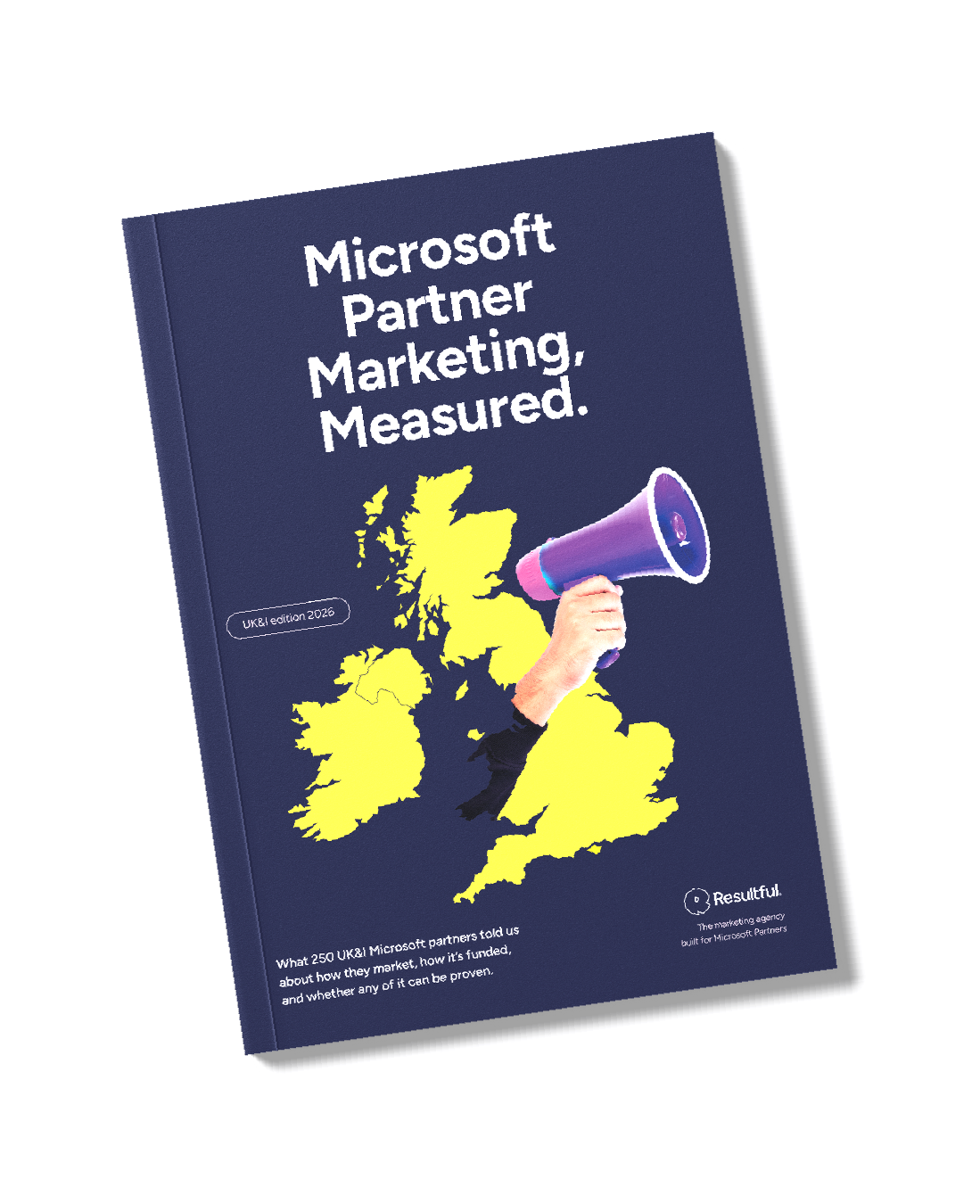
Frequently asked questions
What is a multi-touch campaign?
A coordinated series of marketing interactions, each with its own job, aimed at a defined audience and working towards one commercial objective.
What does FY27 Co-op require for a multi-touch campaign?
Paid media plus at least two eligible supporting activities, such as a landing page, email, blogs or videos, SEO/LLMO/GEO, webinars or case studies, delivered as one coordinated campaign.
Is multi-touch the same as multi-channel?
No. Multi-channel describes where your marketing appears; multi-touch describes the connected interactions somebody has with it.
Can organic social posts count towards the campaign?
Organic social can support the campaign, but publishing posts isn't the claimable expense. Localisation and paid boosting can be, and they don't replace the paid-media anchor.
What evidence do I need for a Co-op claim?
Paid-ad screenshots, supporting creative and platform execution reports showing the date range and performance measures, collected during delivery.