
Most partner leaders have a business continuity plan somewhere. It covers what happens if a key supplier goes under, if the office floods, or if a major customer walks away. What it very rarely covers is what happens to marketing - and the new business it feeds - if the funding behind it disappears.
Our latest research suggests it probably should, and that answering the question is a leadership responsibility rather than a marketing one.
Key takeaways
- 60.6% of Co-op or MDF-funded partners in our UK study say their marketing would stop or reduce if Microsoft funding were withdrawn; 14.9% say it would stop almost completely.
- Microsoft referrals and distributor or vendor leads bring in 35.1% of new business on average, against 22.1% from partners' own marketing.
- Heads of sales (45.45%) and heads of marketing (37.25%) are far more likely than managing directors (27.03%) to call funding rules a blocker.
- 39.4% of funded partners say their marketing would carry on regardless, or even increase.
- Work out your resilience number, list what would stop, name a claims owner and agree a floor for self-funded marketing.
Imagine it's $100,000
Let's make it tangible. Imagine that $100,000 of your marketing each year comes through Co-op, MDF and distributor programs. Now imagine that next year, because the criteria change, a claims window gets missed or your growth doesn't qualify, that money doesn't arrive.
What stops? Which campaigns disappear, which agency relationships end, and what happens to the pipeline six months later? For a lot of partners, the honest answer is "most of it", and our data backs that up.
What partners told us
We asked the 175 UK partners funded by Co-op or MDF what would happen to their marketing if Microsoft funding were withdrawn entirely. 60.6% said it would stop or reduce, with 14.9% saying it would stop almost completely.
And it's not only the marketing budget that's exposed. On average, partners told us Microsoft referrals and distributor or vendor leads together account for 35.1% of their new business, compared with 22.1% from marketing they generated themselves. If a third of your new business arrives through Microsoft and distribution, and most of your marketing budget comes from the same place, that's a lot of your growth sitting with third parties that could turn the tap off at any point.
This isn't a hypothetical
Microsoft has already moved Co-op away from rewarding retention and towards rewarding growth. It makes sense, but partners who can't make growth a reality over the next year may well see less money flowing back into their business. From experience, we've also seen partners stand to lose six-figure sums simply because nobody owned the claims process - the windows closed, and the balance went back.
The role data makes this sharper. Heads of sales (45.45%) and heads of marketing (37.25%) were far more likely to name the complexity of funding rules as a blocker than managing directors (27.03%). The people who actually have to claim the money find it hardest, which is exactly the kind of risk that tends not to reach the board.
Why this sits with leadership
Marketing teams can run the campaigns, but they can't decide how the business is funded or how much risk it's willing to carry. That's a leadership call. And the good news is that some partners have already made it well.
39.4% of funded partners told us their marketing would carry on regardless, or even increase, if Microsoft funding disappeared. They're not bigger or luckier than everyone else; they've simply got their own budget line and their own reasons for marketing, so a program change is an inconvenience rather than a crisis.
Your continuity check
Here's a simple exercise you can run with your finance lead and whoever owns marketing.
Work out your resilience number
Split last year's marketing spend into vendor-funded and self-funded, and turn the self-funded part into a percentage.
List what would stop
Mark which of those activities build your own position, and which run somebody else's campaign.
Name an owner for the claims process
Somebody who knows what's available, what it can be spent on, what evidence is needed and when the windows close.
Decide on a floor
Agree the minimum level of self-funded marketing the business will protect, whatever happens to vendor funding.
Resilience is a choice
Vendor funding is one of the biggest advantages of being a Microsoft partner, and it's well worth making the most of. But the partners who come out of the next few years strongest will be the ones who treat it as an accelerator on top of their own investment, not the thing holding the whole plan up.
The full data is in Microsoft Partner Marketing, Measured - The UK Edition 2026. And if you'd like to run through your own $100k question with us, we're happy to have that conversation.
See how your numbers compare
Microsoft Partner Marketing, Measured - The UK&I Edition 2026. What 250 UK&I Microsoft partners told us about how they market, how it's funded and whether any of it can be proven.
Download the report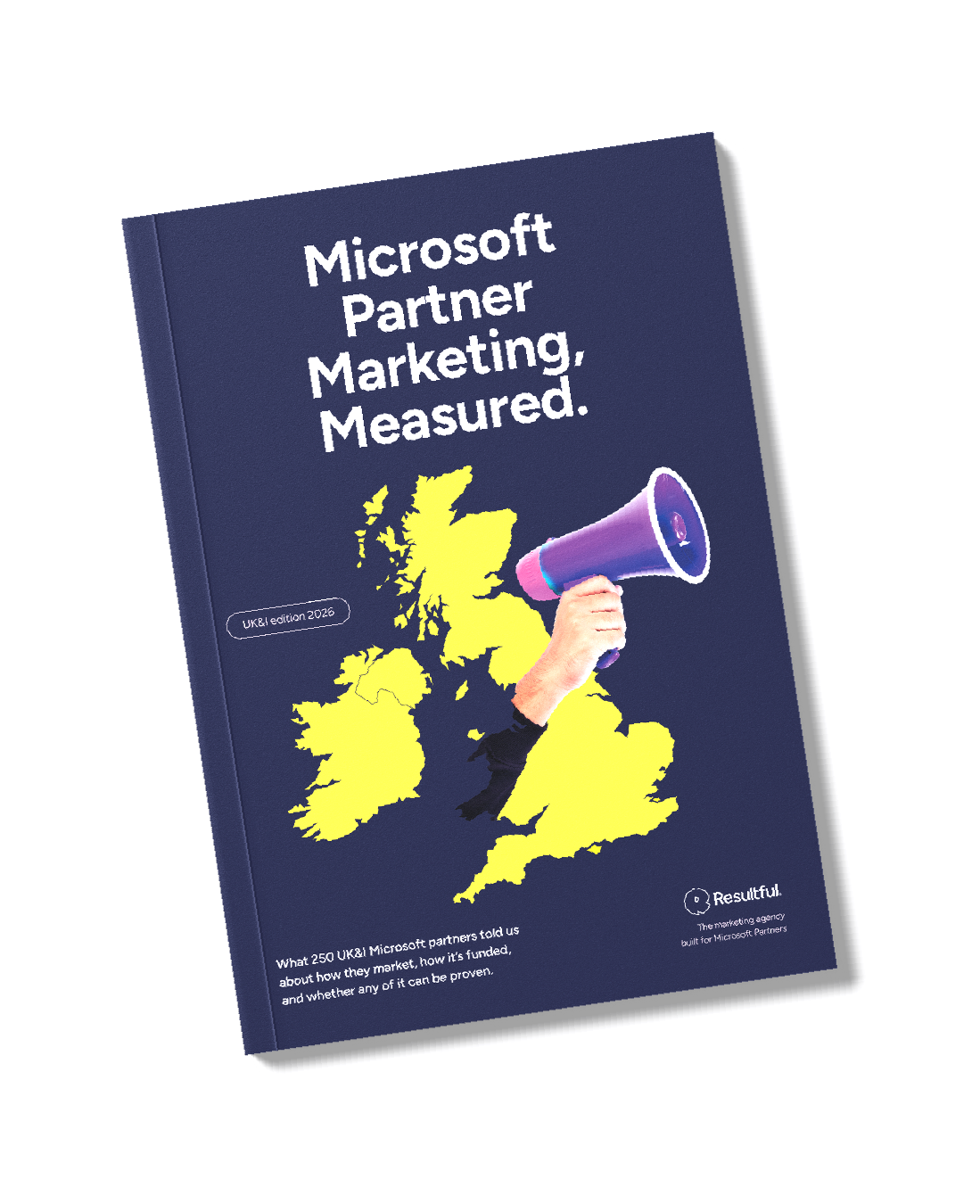
Frequently asked questions
What would happen to partner marketing if Microsoft funding stopped?
In our UK study, 60.6% of Co-op or MDF-funded partners say it would stop or reduce, and 14.9% say it would stop almost completely.
How much new business comes through Microsoft and distributors?
On average, Microsoft referrals and distributor or vendor leads account for 35.1% of new business, against 22.1% from partners' own marketing.
Who finds Microsoft funding rules hardest?
Heads of sales (45.45%) and heads of marketing (37.25%) are far more likely than managing directors (27.03%) to call funding rules a blocker.
Why is funding resilience a leadership decision?
Marketing teams run campaigns, but only leadership can decide how the business is funded and how much risk it carries.
How can a partner check its funding resilience?
Work out the self-funded share of marketing spend, list what would stop, name an owner for claims and agree a minimum level of self-funded marketing.