
Leads are the language most partner marketers default to when they ask for investment, and it's easy to see why. They're tangible, they're countable, and sales understands them. But after looking at what 250 UK Microsoft partners told us in our latest research, we think leaning on lead numbers alone is quietly making budget conversations harder than they need to be.
Don't get me wrong, leads matter. But on their own, they only tell a board a small part of the story it actually cares about.
Key takeaways
- UK partners' top priority is building brand awareness in a crowded market (27.2%), ahead of better use of Co-op funding (25.2%) and winning net-new customers (23.2%).
- 27.6% say difficulty standing out from other partners holds their marketing back, the top limitation in the study.
- 25.2% name over-reliance on vendor-supplied material as a limitation.
- Build budget requests around visibility, category ownership, pipeline contribution and growth priorities, with leads as supporting evidence.
- Only 45.6% of UK partners say their marketing plan is directly aligned to business goals.
What partners are really worried about
We asked UK partners to pick their top three marketing priorities from a list of eleven. At the top was building brand awareness in a crowded market (27.2%), followed by better use of Co-op funding (25.2%) and winning net-new customers (23.2%). When we asked what was holding their marketing back, 27.6% said difficulty standing out from other partners.
It's unsurprising, really, that standing out ranked highly, but what was surprising is that it came out on top. Partners are starting to recognise that some of the reasons they're not generating net-new opportunities is because they lack differentiation. And that's not a problem a lead target will ever fix on its own.
Why lead numbers undersell marketing
When you ask for budget purely on leads, you're inviting the board to judge marketing like a vending machine: put money in, count what comes out. That works for a narrow slice of activity, but it undervalues everything that makes a partner easier to choose in the first place.
And the data suggests the market is crowded precisely because so many partners sound the same. A quarter (25.2%) named over-reliance on vendor-supplied material as a limitation, and when every partner runs the same activities with the same adapted Microsoft messaging, the customer conversation ends up coming down to cost rather than capability.
A better vocabulary for your next budget meeting
Instead of leading with leads, try building your case around the things the board is already worried about. Here's the language we'd use.
Visibility
Are the customers you want to win aware that you exist, and do they think of you when a need comes up?
Category ownership
What are you known for? A specific industry, a type of project you've delivered thirty times, or a problem you solve better than anyone else nearby.
Pipeline contribution
Not just how many leads, but how much of the pipeline marketing created or influenced, and how much of it closed.
Growth priorities
Which of the business's growth targets does this investment serve, and how will you know if it's helped?
Our study didn't ask partners about market share, and we'd be wary of promising your board a number you can't measure. But you can absolutely show how your visibility and positioning are moving over time, and tie that back to the pipeline that follows.
Tie it to the plan
There's one more number that makes this argument for you. Only 45.6% of UK partners said their marketing plan is directly aligned to business goals, and 49.2% said it isn't - the only statement in the study where more partners answered false than true. If your budget request starts from the business's goals and shows how visibility, positioning and pipeline all feed into them, you're immediately in the stronger half of the market.
What to do next
Firstly, try the swap test. Take the three claims you lead with on your website and ask whether a competing Microsoft partner could put that exact sentence on their own site tomorrow without lying. If they could, it isn't doing the job you think it is, and that's the first thing worth investing in.
Then rewrite your next budget request around the four themes above, using leads as supporting evidence rather than the headline. You'll find the conversation shifts from "how many did we get?" to "how do we become the partner customers choose?", and that's a far better conversation to be having.
The full data on priorities and limitations is in Microsoft Partner Marketing, Measured - The UK Edition 2026. And if you'd like to talk through how to position your next request, we're always up for a chat.
See how your numbers compare
Microsoft Partner Marketing, Measured - The UK&I Edition 2026. What 250 UK&I Microsoft partners told us about how they market, how it's funded and whether any of it can be proven.
Download the report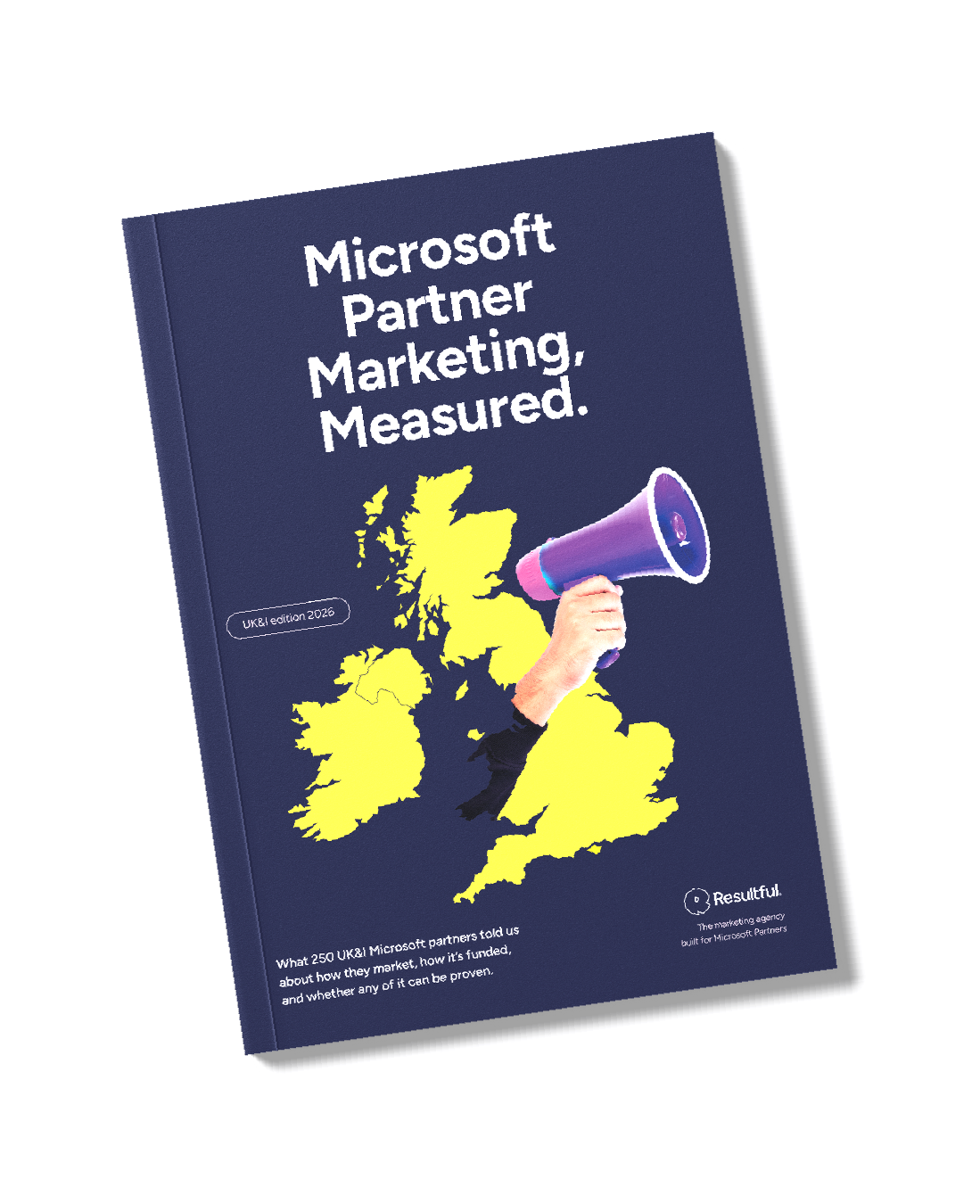
Frequently asked questions
What are UK Microsoft partners' top marketing priorities?
Building brand awareness in a crowded market (27.2%), better use of Co-op funding (25.2%) and winning net-new customers (23.2%).
What holds UK partner marketing back most?
Difficulty standing out from other partners, named by 27.6%. A quarter (25.2%) also cite over-reliance on vendor-supplied material.
Why shouldn't a budget request lead with leads?
Leads only show a small part of what the board cares about and undervalue the work that makes a partner easier to choose in the first place.
What should a budget request focus on instead?
Visibility, category ownership, pipeline contribution and growth priorities, with leads as supporting evidence.
What is the swap test?
Check whether a competing Microsoft partner could put your top three website claims on their own site without lying. If they could, those claims aren't differentiating you.