
Every budget meeting we've ever sat in has had a moment where somebody turns to marketing and asks, in one way or another, "so what are we actually getting for this?" It's a fair question, and with Co-op now rewarding growth rather than retention, it's one that's going to come up more often and with a bit more edge to it.
The marketers who handle that moment well are the ones who walk in with a small number of facts they can stand behind. So, using the data from our UK&I report, here are the five numbers we'd want in our back pocket - what the market looks like, and how to turn each one into a proper boardroom conversation.
Key takeaways
- The average UK&I Microsoft partner invests around 3.85% of revenue in marketing, with 62% in the 3-5% band.
- Marketing generates 22.1% of new business on average - roughly two in every ten new customers.
- Only 47.2% of UK&I partners run basic marketing reporting, and 43.6% run attribution.
- Three quarters have a documented plan, but only 45.6% say it's directly aligned to business goals.
- Check the investment figure with your MD first: MDs reported 4.49% of revenue, heads of marketing 2.93%.
The five numbers at a glance
| Benchmark | UK partner figure | The question it lets you ask |
|---|---|---|
| Average marketing investment | 3.85% of revenue | Where do we sit, and is it deliberate? |
| New business generated by marketing | 22.1% on average | What share of our wins did marketing create? |
| Partners running basic reporting | 47.2% | Do we report on marketing regularly? |
| Partners running attribution | 43.6% | Can we see which activity influenced a deal? |
| Partners with a documented plan | Three quarters | Is ours written down and tied to business goals? |
1. What you invest
The average UK partner invests around 3.85% of revenue in marketing, with 62% in the 3-5% band - that's £3,000 to £5,000 for every £100,000 the business generates. A quarter of partners (25.2%) sit down at 1-2%, and just 12.4% get above 6%.
The conversation worth having here is whether your number is a deliberate choice, and whether the board and marketing agree on what it actually is (more on that in a moment).
2. What marketing brings in
We asked partners to split last year's new business by where it came from. On average, marketing they generated themselves accounted for 22.1%, while Microsoft referrals and distributor or vendor leads together brought in 35.1%. Put simply, for every ten new customers a UK partner wins, marketing brings in roughly two.
If you know your own figure, bring it. If you don't, that's worth saying out loud too, because it leads you neatly on to the next two numbers.
3. Whether you report at all
Only 47.2% of UK partners run basic marketing reporting, and 12.4% told us they have no plans to introduce it at all. That's striking when you consider that most partners are running nine or ten marketing activities at once. If you're in the reporting half, say so - it's a genuine point of difference. If you're not, the ask almost writes itself.
4. Whether you can see what worked
43.6% of UK partners run enhanced reporting with attribution, meaning they can connect a specific activity to a specific deal. This is the number that turns "marketing is going well" into "this campaign produced twelve enquiries and three of them closed", and those are two very different conversations to be having with a board.
5. Whether the plan is pointed at the business
Three quarters of UK partners have a documented marketing plan, which sounds healthy until you see that only 45.6% say it's directly aligned to business goals - and 49.2% say it isn't. It's the only statement in the whole study where more partners answered false than true. If your plan starts from the board's growth targets and works backwards, lead with that.
Turning the numbers into a conversation
Don't present the five numbers as a slide of stats and hope for the best. Instead, use them as a running order for the meeting. Start with investment and agree the figure. Move on to what marketing delivered, and be honest about how confident you are in that number. Then use reporting and attribution to explain why the answer is as fuzzy (or as clear) as it is, and close on the plan, showing how the investment you're asking for is tied to what the business wants next year.
One tip before you go in: check the first number with your MD beforehand. In our study, managing directors reported an average of 4.49% of revenue going into marketing, while heads of marketing reported 2.93% - a gap of more than a point and a half on a question of fact. If you and your board are starting from different figures, it's very hard to agree on anything that follows.
The payoff
Five numbers won't win every budget conversation, but they'll change the tone of it. You'll be the person in the room talking about the business rather than about marketing, and in our experience, that's the person who tends to get listened to.
The full data is in Microsoft Partner Marketing, Measured - The UK Edition 2026. If you'd like to talk through how your own five numbers stack up, just drop us a line.
See how your numbers compare
Microsoft Partner Marketing, Measured - The UK&I Edition 2026. What 250 UK&I Microsoft partners told us about how they market, how it's funded and whether any of it can be proven.
Download the report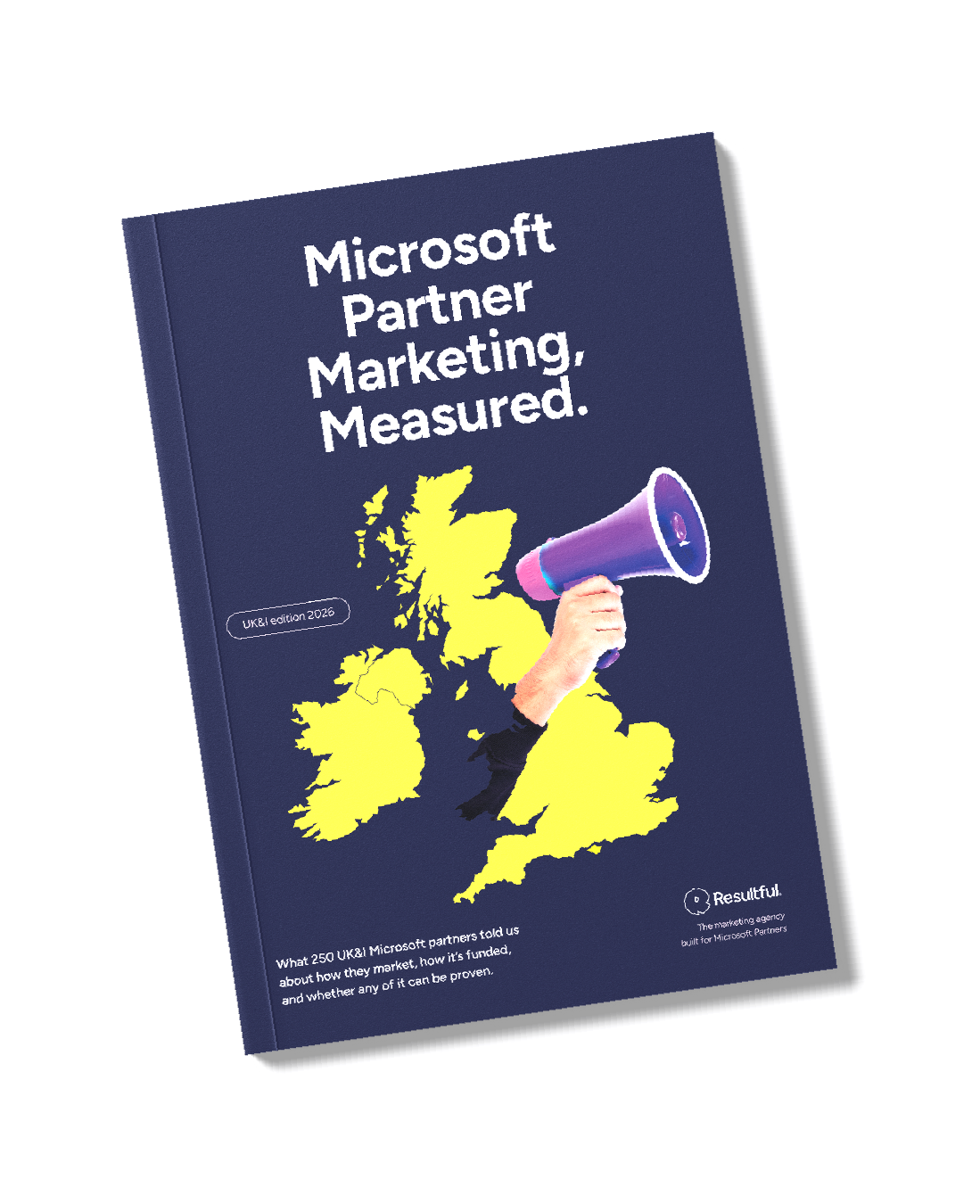
Frequently asked questions
How much do UK&I Microsoft partners invest in marketing?
Around 3.85% of revenue on average, with 62% in the 3-5% band, 25.2% at 1-2% and 12.4% above 6%.
How much new business does marketing generate for Microsoft partners?
22.1% on average, while Microsoft referrals and distributor or vendor leads together bring in 35.1%.
How many Microsoft partners run marketing reporting?
47.2% of UK&I partners run basic reporting, 43.6% run attribution, and 12.4% have no plans to introduce reporting.
Why check the investment figure with your MD first?
In the study, managing directors reported 4.49% of revenue going into marketing, while heads of marketing reported 2.93%.